
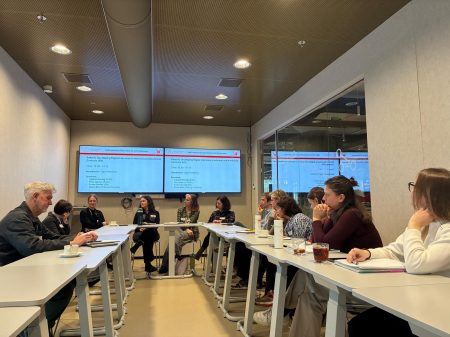
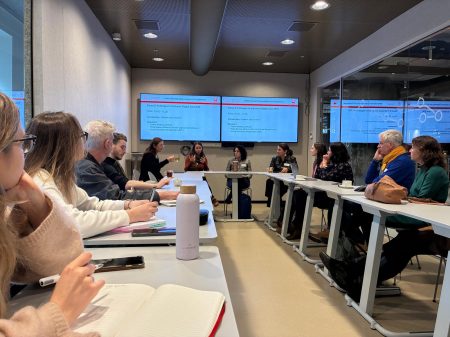
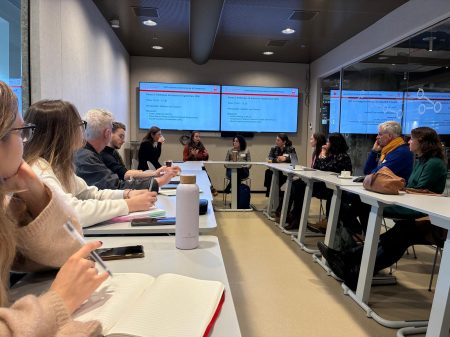
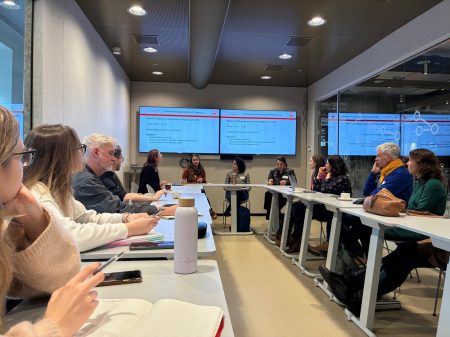
The past few months have been a busy and inspiring period for the DigiMig team, filled with engaging conferences and meaningful connections. We are excited to highlight two key events where we shared our research and insights in Groningen: the DAMR Annual Conference and the Informed Citizenship for All conference.
Sharing Research at the DAMR Annual Conference
Each year, the DAMR Annual Conference brings together scholars from various disciplines and career stages to exchange ideas, discuss pressing issues in migration studies, and build new collaborations. This year’s program featured eight interdisciplinary panels, including one focused on Transnational Families, Youth, and Belonging.
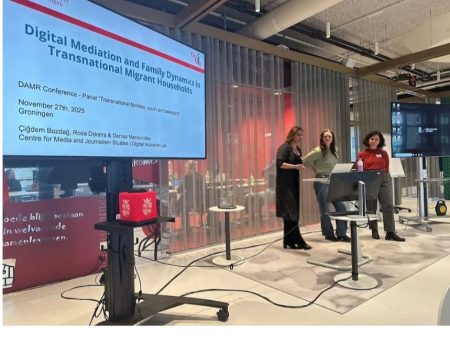
During this panel, Çiğdem, Rosa, and Denise presented their work titled “Digital Mediation and Family Dynamics in Transnational Migrant Households.” Their presentation drew on findings from two research projects:
• INCLUDED: A participatory action research project in Bremen, Germany, exploring how young people (ages 13–15) in diverse and economically disadvantaged neighborhoods engage with digital media.
• DigiMig: A project in the Netherlands examining families with a migration history, focusing on digital inclusion and intergenerational learning.
Insights from these projects show that digital technologies play a key constructive role in family practices in the context of migration. Three key insights emerged:
- Maintaining Transnational Connections
Migrant families primarily sustain their transnational relationships through digital communication tools such as messaging apps, social media platforms, and video calls. - Media as a Shared Family Practice
Media serves as a bridge between generations, creating shared moments and cultural resources for identity negotiations. - Co-constructed Digital Practices
Digital media use is shaped by family dynamics. Parents often set rules and norms, while children frequently act as mediators, helping parents navigate digital technologies, especially in families with lower socioeconomic backgrounds.
Continuing the Conversation at “Informed Citizenship for All”
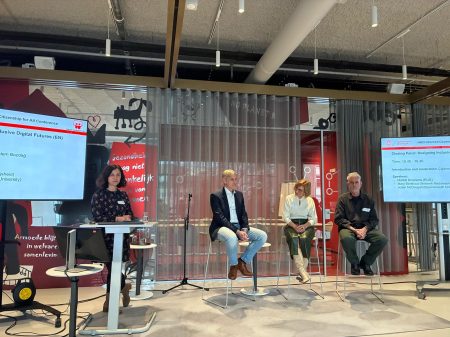
These insights also formed the basis for a panel discussion titled “Developing Digital Literacies in Informal and Nonformal Contexts” at the Informed Citizenship for All conference.
Together with Amber Bartlett (Radboud University) and Malou Beck (Tilburg University), Çiğdem and Rosa explored key questions such as:
• How does context influence the development of digital literacy?
• What opportunities and challenges do informal and non-formal environments present?
• What roles do different social actors—parents, teachers, librarians, volunteers, and childcare professionals—play in fostering digital skills?
The session sparked a lively and engaging discussion, drawing a strong audience and offering valuable perspectives for everyone involved.